
FLATS · GUIDE
What do the Fire Safety (England) Regulations 2022 mean for Bristol landlords of flats?
Fire safety instructions, fire door information, door checks over 11 metres and the extra duties for high-rise buildings.
What do the Fire Safety (England) Regulations 2022 mean for Bristol landlords of flats?
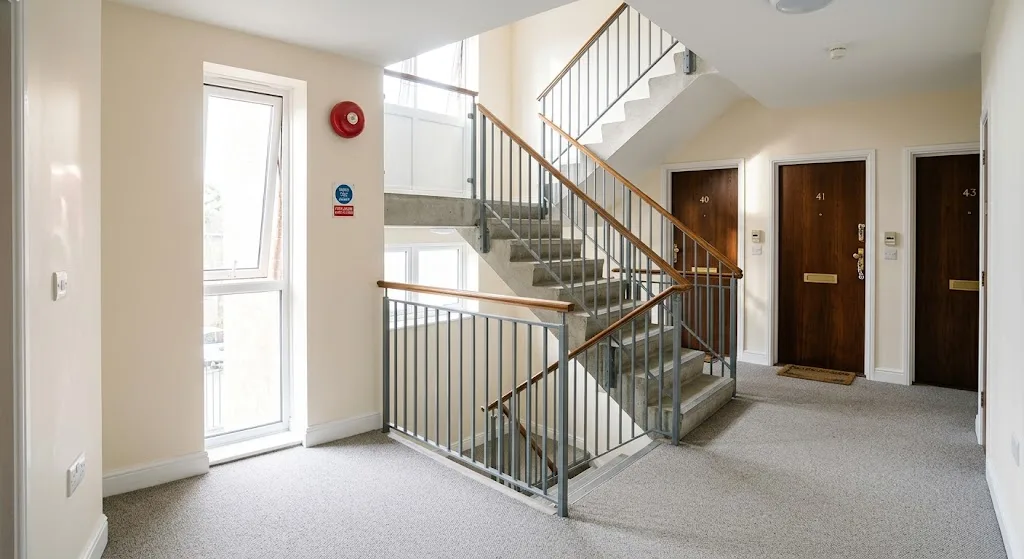
If you own or manage a building in Bristol with two or more flats and shared parts, such as a hall or stairs, these regulations add duties on top of the Fire Safety Order. Since 23 January 2023, every building like that needs fire safety instructions and fire door information for residents. Buildings with storeys over 11 metres add regular fire door checks, and high-rise buildings add more again.
| Building | What the responsible person must do | When |
|---|---|---|
| Two or more flats with shared parts, any height | Give residents fire safety instructions: how to report a fire, the building's evacuation strategy, and what to do once a fire has started | When residents move in, every year, and whenever the instructions change. Display them in the communal areas too. |
| Two or more flats with shared parts, any height | Give residents information about the importance of fire doors | When residents move in, and every year |
| Storeys over 11 metres | Check all fire doors in the common parts, including self-closers | Every three months |
| Storeys over 11 metres | Check flat entrance doors, including self-closers, on a best-endeavours basis | Every year |
| High-rise: 18 metres or at least seven storeys | Floor plans for the fire service, a secure information box, wayfinding signs, external wall information and monthly checks of firefighting lifts | As each duty sets out |
Source: GOV.UK, Fire Safety (England) Regulations 2022 fact sheets, read 12 November 2026. The fact sheets are a summary, not the regulations themselves.
Does my building count?
The duties for all buildings apply to multi-occupied residential buildings with two or more sets of domestic premises and common parts. A Victorian house in Bristol converted into flats with a shared hall and stairs is the typical example. A house let as one home does not count, and the government says maisonettes without common parts are not intended to be covered. The door check and high-rise duties depend on height, so if you are not sure which side of 11 metres your building falls, ask your assessor to confirm it.
What do the fire safety instructions need to say?
The instructions cover how to report a fire, a reminder of the building's evacuation strategy, and anything else residents should do once a fire has started, based on that strategy. Give them to residents directly when they move in, again every year, and whenever you update them, and display them clearly in the communal areas. They need to be in a form residents can reasonably be expected to understand. The government suggests pictures and face-to-face contact can help, though translation is not required.
Which fire doors do I have to check, and how often?
In buildings with storeys over 11 metres, check every fire door in the common parts every three months, including the self-closing devices. Check flat entrance doors every year. Those checks are on a best-endeavours basis, and the government leaves it to the responsible person to decide how to get access from residents. Keep a note of each attempt, so you can show what you tried. For help with the checks, see fire door inspections.
What extra applies to high-rise buildings?
High-rise means 18 metres or at least seven storeys. The responsible person must give the fire service up-to-date electronic floor plans, keep hard copies and a single-page plan in a secure information box on site, give the fire service information about the external wall system, check firefighting and evacuation lifts every month, report faults that cannot be fixed within 24 hours, and fit wayfinding signs in stairwells showing flat and floor numbers.
Do I still need a fire risk assessment?
Yes. These regulations sit alongside the Fire Safety Order, which still requires a fire risk assessment of the shared parts of a building with two or more flats. Since 1 October 2023 the full assessment must be recorded, whatever the size of the building. The assessment is also where you find the building's evacuation strategy, which the fire safety instructions are based on. For more on flats, see landlords and flats.
Frequently asked questions
Does this apply to a house split into two flats?
If the two flats share parts of the building, such as a hall or stairs, the duties to give fire safety instructions and fire door information apply. The door check duties only apply where storeys are over 11 metres.
Do I need quarterly door checks in a three-storey conversion?
The quarterly and annual checks in these regulations apply to buildings with storeys over 11 metres. Below that, these regulations do not require them, though your fire risk assessment may still recommend checks.
How should I give residents the fire safety instructions?
Directly when they move in, then every year, and whenever the instructions change. Display them in the communal areas as well.
What if a tenant won't let me check their flat entrance door?
The annual check is on a best-endeavours basis, and it is up to you how you engage residents. Keep a record of each attempt to get access.
Do these regulations apply in Wales?
No. They apply in England only.
Is this legal advice?
No. It is a summary of the government's fact sheets. Check the regulations themselves, or ask your assessor, for your building.
ENQUIRY
Tell us about your building.
Flats and converted houses across Bristol and Bath: share a few details and we’ll get back to you about an assessment.
Or call 0117 463 7863.
Or email hello@fire-risk-assessment-bristol.co.uk.
BRISTOL & BATH